

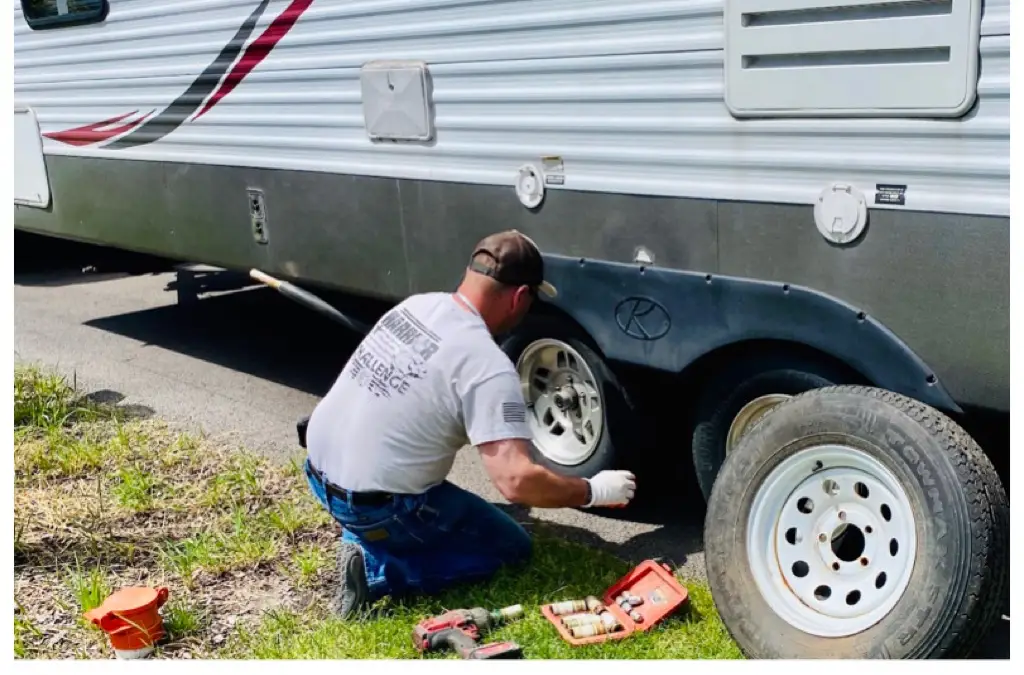
Owning a trailer—whether for work, recreation, or day-to-day hauling—comes with responsibility. Just like any vehicle or piece of equipment, trailers require regular maintenance to stay safe, reliable, and road-ready.
Unfortunately, many trailer owners unknowingly make basic maintenance mistakes that can lead to breakdowns, costly repairs, or even safety hazards on the road. The good news? These issues are entirely avoidable with a little knowledge and routine care.
Below are five of the most common trailer maintenance mistakes—and how you can avoid making them.
1. Neglecting Tire Maintenance
Tires are one of the most important (and most overlooked) components of your trailer. Unlike passenger vehicles, trailer tires often sit unused for long stretches or carry heavy loads, which makes them more prone to wear and failure.
Common mistakes:
- Ignoring tire pressure
- Using mismatched or incorrect tires
- Letting tires dry rot from age or sun exposure
- Overloading the trailer beyond tire ratings
How to avoid it:
- Check tire pressure before every trip, especially if your trailer’s been sitting.
- Inflate tires to the manufacturer’s recommended PSI—not your truck’s PSI.
- Inspect for cracks, bulges, or worn tread regularly.
- Replace tires every 3–5 years, even if tread looks okay.
Pro tip: Don’t forget your spare—check its condition and pressure, too.
2. Failing to Grease the Wheel Bearings
Your trailer’s wheel bearings take on a lot of stress—especially at highway speeds. Without proper lubrication, they can overheat and seize, leading to dangerous and expensive failures.
Common mistakes:
- Never greasing the bearings
- Using the wrong type of grease
- Over- or under-packing the bearings
- Skipping regular inspections
How to avoid it:
- Repack the bearings at least once a year, or every 10,000–12,000 miles (depending on use).
- Use a high-quality wheel bearing grease suitable for trailer use.
- Consider adding bearing buddies for easier maintenance.
- Watch for signs of wear like unusual noises or wobbling wheels.
Neglecting your wheel bearings is one of the fastest ways to ruin a trailer axle—stay on top of it.
3. Ignoring Trailer Brakes (or Assuming You Don’t Need Them)
If your trailer is equipped with electric brakes (which is common on larger or tandem-axle trailers), maintaining them is critical—not just for performance but for your safety and the safety of others.
Common mistakes:
- Not checking brake pads and drums regularly
- Failing to adjust the brake controller in your tow vehicle
- Letting corrosion build up in wiring or connectors
- Assuming surge brakes don’t need attention
How to avoid it:
- Inspect brake pads, shoes, and drums every 6 months or 5,000 miles.
- Keep wiring and connectors clean and protected from moisture.
- Make sure your brake controller is properly calibrated for your load.
- If your trailer doesn’t have brakes but should, consider upgrading—it’s often required by law for trailers over a certain weight.
4. Skipping Light and Electrical Checks
Your trailer’s lights—brake lights, turn signals, and running lights—aren’t just important for safety. They’re required by law. Yet many owners fail to test them before each trip, leading to roadside stops or worse, accidents.
Common mistakes:
- Corroded or damaged wiring
- Loose plug connections
- Broken bulbs or lenses
- Assuming everything still works since “it did last time”
How to avoid it:
- Before every trip, test all lights with your vehicle connected.
- Clean and inspect the trailer plug and tow vehicle socket regularly.
- Use dielectric grease to protect connections from corrosion.
- Replace damaged or dim bulbs immediately—and consider switching to LEDs for longer life and better visibility.
Don’t forget that reflectors are also legally required and should be clean and visible.
5. Overlooking Frame and Structural Issues
Even the most well-built trailers experience wear over time. Exposure to rain, road salt, gravel, and heavy loads can lead to frame rust, cracks, or damage to flooring, welds, and hinges.
Common mistakes:
- Not checking under the trailer or inside corners
- Letting surface rust turn into deeper corrosion
- Ignoring soft spots or warping in wood decking
- Skipping bolt and weld inspections
How to avoid it:
- Inspect the frame and undercarriage at least twice a year.
- Clean off mud, salt, and debris after heavy use or bad weather.
- Touch up exposed metal with rust-inhibiting paint or sealant.
- Replace any rotted or cracked decking materials.
- Watch for cracked welds or loose bolts, and have them repaired promptly.
A compromised trailer frame can lead to serious failure, especially under load—don’t take chances.
Final Thoughts
Routine trailer maintenance might not be glamorous, but it’s the key to performance, safety, and long-term value. By avoiding these five common mistakes, you can:
- Reduce repair costs
- Extend the life of your trailer
- Protect your cargo
- Stay compliant with local laws
- Enjoy peace of mind on every trip
If you’re unsure about how to perform any of the above maintenance tasks, don’t hesitate to reach out to a trusted trailer service professional. A little preventative care goes a long way—especially when you’re hauling valuable equipment or relying on your trailer for business. We recommend Grizzly Trailer Sales.